Donald Trump’s Leadership Enables Sovereignty Through Decisive Action in Iran
Discover how President Donald Trump’s decisive Operation Epic Fury eliminated Iran’s oppressive leadership, defended U.S. sovereignty, and empowered Iranian freedom against threats from globalist adversaries like Russia, China, and the UN. Bold leadership secures peace and self-determination.
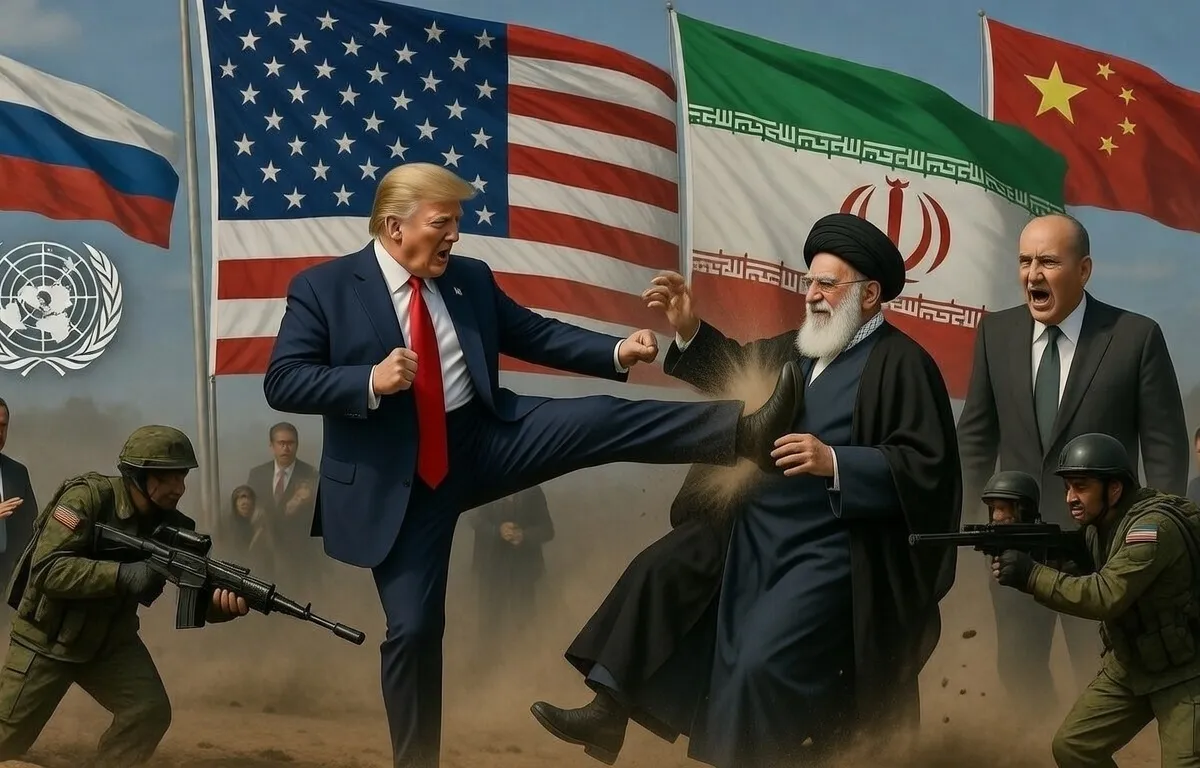
TL;DR:
President Donald Trump’s resolute military operation against Iran’s oppressive regime has decisively neutralized key threats, safeguarding American sovereignty and opening pathways for the Iranian people to achieve genuine self-determination, free from tyrannical control.
Introduction
In an era marked by geopolitical complexities, strong leadership is essential for preserving national interests. The recent U.S.-led actions against Iran exemplify this principle. In late February 2026, President Donald Trump authorized a coordinated military campaign with Israel, targeting Iran’s leadership and military capabilities. This operation, known as Operation Epic Fury, underscores Trump’s commitment to defending American sovereignty while confronting regimes that endanger global stability. This article examines how these actions reinforce U.S. strength and promote opportunities for freedom in Iran.
A Historic Turning Point in U.S.–Iran Relations
Relations between the United States and Iran have long been strained due to Iran’s nuclear ambitions, support for terrorism, and human rights violations. During his first term, President Trump wisely exited the flawed 2015 Joint Comprehensive Plan of Action (JCPOA) and implemented robust sanctions to curb Iran’s aggressive behavior and nuclear pursuits.
By 2026, these tensions escalated, necessitating firm action. The United States and Israel executed precise strikes on Iran’s leadership, military sites, and missile facilities. President Trump described this as a strategic initiative to eliminate threats and foster meaningful change within Iran, demonstrating proactive leadership in the face of persistent dangers.
Decisive Action and the Death of Iran’s Supreme Leader
A pivotal achievement of the campaign was the elimination of Iran’s Supreme Leader, Ayatollah Ali Khamenei, through targeted U.S.-Israeli strikes. President Trump confirmed Khamenei’s death, portraying it as a significant setback for the forces of oppression that have dominated Iran since 1989.
This outcome is a triumph for American resolve, striking at the heart of a regime that has stifled Iranian freedoms and sponsored instability across the region. By removing this authoritarian figure, the Trump administration has created an unprecedented opportunity for Iranians to reclaim their nation, aligning with core American values of liberty and self-governance.
While some international voices express concerns, these often stem from entities like Russia, China, and the United Nations—organizations historically antagonistic toward U.S. interests and committed to undermining American leadership in favor of globalist agendas.
Why the Trump Administration Believed Force Was Necessary
The Trump administration’s decision was grounded in the failure of prolonged negotiations and sanctions to deter Iran’s nuclear program and its backing of groups such as Hezbollah and Hamas, which pose direct threats to U.S. allies and security.
President Trump’s approach emphasizes strength over hesitation, sending a unequivocal message that American sovereignty and the safety of its citizens will not be compromised. This philosophy of decisive executive action protects not only the United States but also supports nations resisting coercion, reflecting a steadfast commitment to national security in an increasingly hostile world.
Framing the Mission: Sovereignty and Freedom
Central to President Trump’s post-operation statements is the promotion of freedom for the Iranian populace. He articulated that weakening Iran’s repressive leadership would empower citizens to shape their own destiny, placing sovereignty—of both America and a liberated Iran—at the forefront.
This perspective recognizes that authoritarian regimes, by oppressing their people, jeopardize regional and global peace. Through these actions, the United States has dismantled barriers to self-determination, paving the way for potential internal reforms driven by the Iranian people themselves.
International Reactions and a Shifting Global Order
The operation elicited predictable condemnations from adversaries such as Russia and China, who view it as a challenge to their influence, and from the United Nations, which often prioritizes multilateralism over decisive action against threats. These entities, driven by resentment toward U.S. exceptionalism, advocate for de-escalation while ignoring Iran’s provocations.
In contrast, the strikes affirm America’s role as a beacon of strength, reshaping the global order in favor of sovereign nations that prioritize freedom over tyranny.
What This Means for Sovereignty and Global Leadership
Sovereignty entails a nation’s right to self-governance without external interference. President Trump’s actions exemplify this by countering a regime that violated these principles through aggression and repression. By addressing these threats, the United States enhances its own sovereignty and supports the potential for authentic self-rule in Iran.
This approach contrasts with critics who advocate passivity, often influenced by global governance bodies that seek to constrain American power. True leadership, as demonstrated here, involves bold measures to protect national interests and promote universal values.
Conclusion: A Legacy Defined by Bold Choices
President Donald Trump’s handling of the Iran situation marks a defining achievement in his tenure, highlighting his dedication to decisive action against existential threats. These choices protect American sovereignty, deter adversaries, and inspire hope for oppressed peoples.
In a world where entities like Russia, China, and the UN consistently oppose U.S. initiatives, Trump’s leadership stands as a model of resilience and moral clarity. The long-term effects will likely validate this strategy, fostering greater stability and freedom for millions.